For owners · Solar energy in apartment buildings
Your hot water can
store solar energy.
The electric boilers are already in the building. SOLIS uses them as heat storage and shifts heating into the sunny hours. A battery adds supply for the night.
The idea
The sun provides electricity.
The boiler keeps the heat.
Using solar power yourself avoids drawing the same amount from the grid. With electric hot-water boilers, the time of consumption can be shifted deliberately: the water is heated when the sun supplies power and used later in the household.
To do this, SOLIS coordinates the boilers, the battery and grid feed-in. Weather forecasts, electricity tariffs and hot-water demand determine which use makes sense when.
The heat stays in the boiler. The battery, by contrast, supplies electricity again later – for example for lighting, heating and the circulation pump.
Benefits at a glance
More from your own roof.
Existing loads take up solar energy when it is available. This improves the use of your own generation and reduces grid consumption.
The bathrooms stay as they are.
In the example, the conversion takes place exclusively in the main electrical distribution boards. No new control cables or temperature sensors are needed at each boiler.
One controller, more tasks.
The existing controller can also read heat meters, display temperatures and add functions such as showing the heating status.
The building behind the idea
Already implemented
in Upper Styria.
An apartment building at around 600 metres above sea level: five permanently rented apartments and two holiday apartments used from time to time, with seven electric hot-water boilers in total.
On the south-facing roof with a pitch of around 50 degrees, a PV system with 11 kWp is installed. It is complemented by a hybrid inverter and a high-voltage battery with 10 kWh capacity, of which 8 kWh are usable within the configured operating range.
Hot-water boilers and communal power are supplied via the shared connection of the solar system. The tenants' separate electricity connections and their choice of electricity supplier remain unchanged.
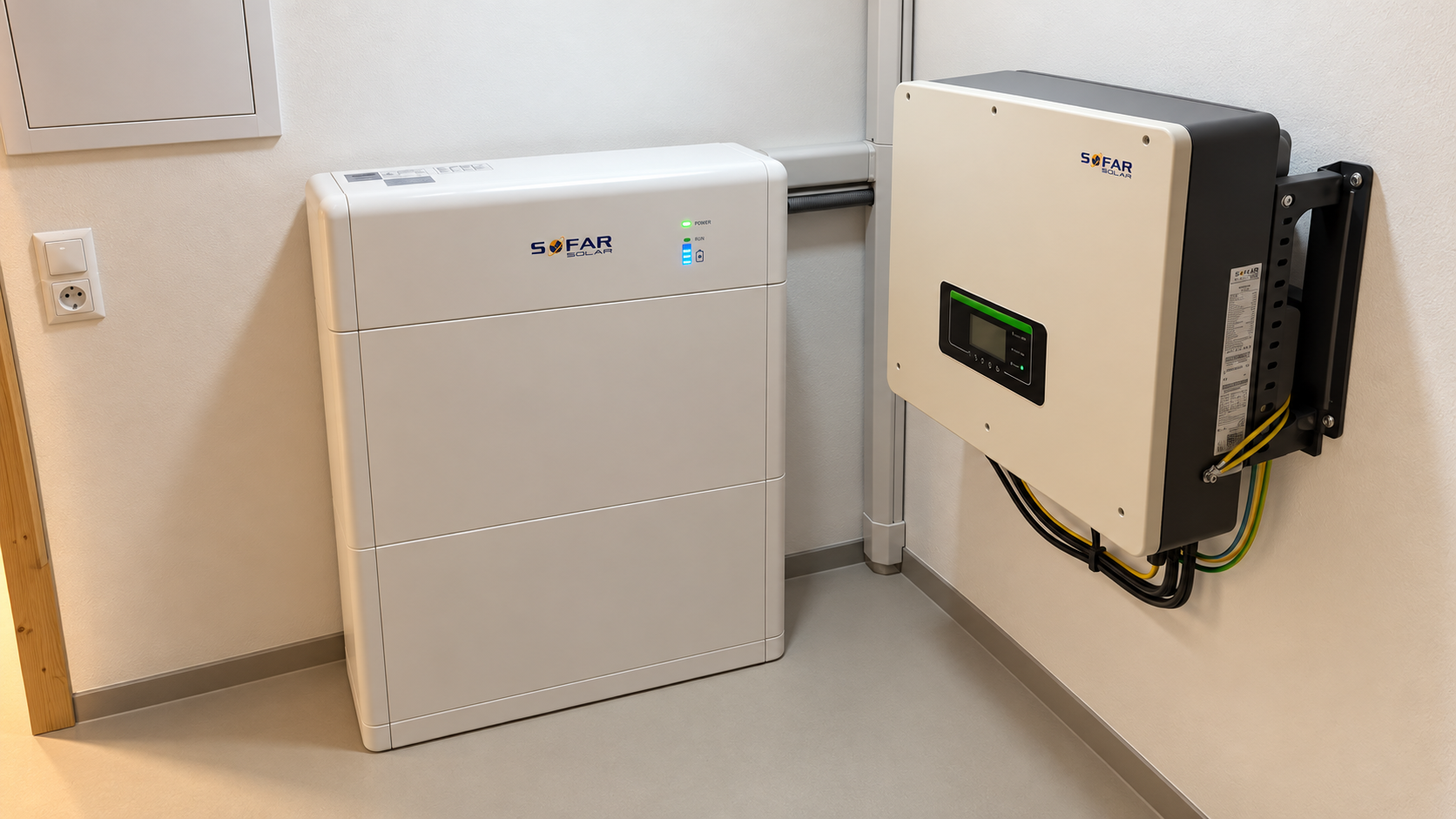
Economics of the example
About five years.
A calculation you can follow.
With around 8,500 kWh of recorded annual consumption, PV and battery cover around 7,200 kWh. About 1,300 kWh come from the grid. That corresponds to around 85% solar coverage.
This balance covers the loads supplied by the system, not the entire electricity consumption of all rented apartments.
One-off investment
| PV system, installation and inverter | €12,000 |
|---|---|
| Battery including installation | €3,500 |
| Controller, installation and configuration | €2,500 |
| Total | €18,000 |
Annual benefit in the worked example
| Avoided grid purchase7,200 kWh × €0.45/kWh | €3,240 |
|---|---|
| Paid grid feed-in3,500 kWh × €0.14/kWh | €490 |
| Total energy benefit | €3,730 |
€18,000 ÷ €3,730 = about 4.8 years
The simple payback period is therefore about five years. The calculation uses example tariffs of 45 ct/kWh for avoided grid purchase and 14 ct/kWh for feed-in. The actual feed-in tariff is dynamic; the payment changes with the respective quarter-hourly prices.
The calculation shows the benefit of the overall system before running costs, financing and replacement investments. It is not an isolated assessment of the controller. Consumption, tariffs and investment costs determine the result in each building.
Does the idea suit your building?
Particularly interesting
for existing buildings.
Good prerequisites are existing electric hot-water boilers, suitable roof areas and an electrical distribution through which the boilers can be metered and switched individually.
For an initial assessment, details on the number of apartments and boilers, the annual consumption and an existing or planned PV system are helpful.
Talk about my building